



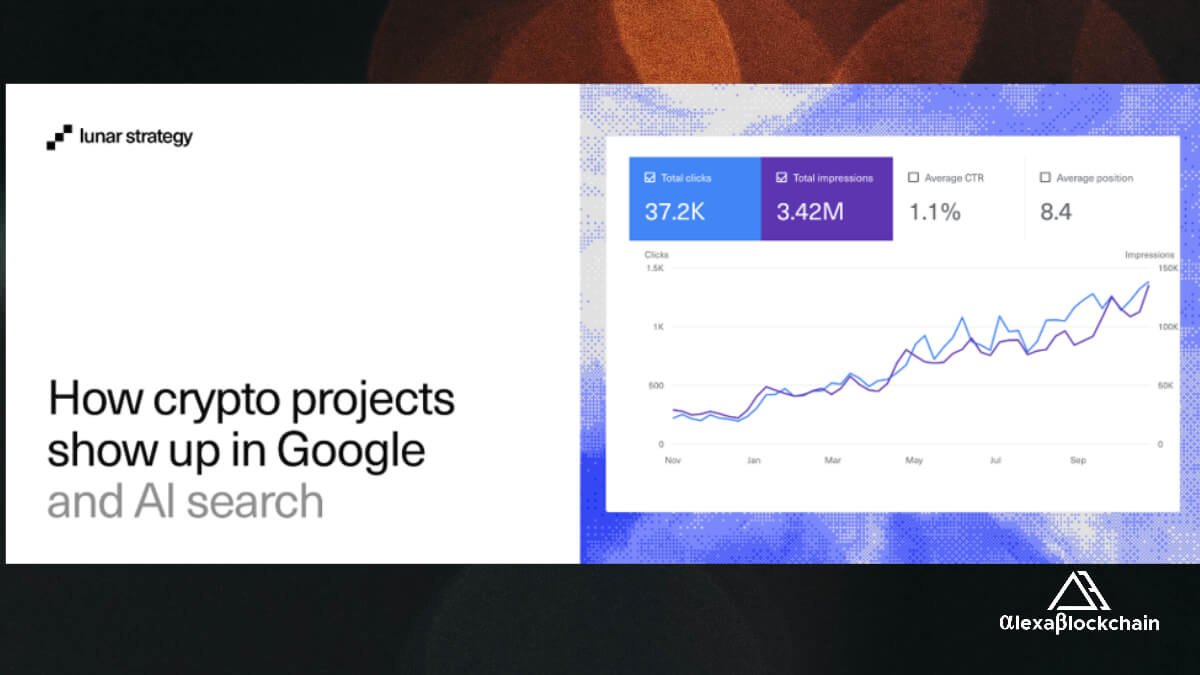
This is a contributor content by Tim Haldorsson, CEO of Lunar Strategy, a crypto marketing agency.
People research a token, a protocol or a potential partner the same way: they type a question into Google or ChatGPT and read what comes back. The pages and sources that show up in that moment shape what they believe about a project before they ever reach its website.
Most crypto teams invest heavily in X, KOL campaigns, community and PR, and leave search for last. This piece explains the two disciplines that decide what people find, SEO and AEO, and the practical steps that improve both at the same time.
Two ways to be found
SEO (search engine optimization) is about ranking your pages in Google and Bing. It covers keywords, content, links from other websites and the technical health of your site.
AEO (answer engine optimization) is about being named inside the answers that AI tools write, in ChatGPT, Perplexity and Google’s AI Overviews. When an AI tool answers, it shows a few linked sources next to the text. Those links are called citations, and in AI search they play the role a first-page ranking plays on Google.
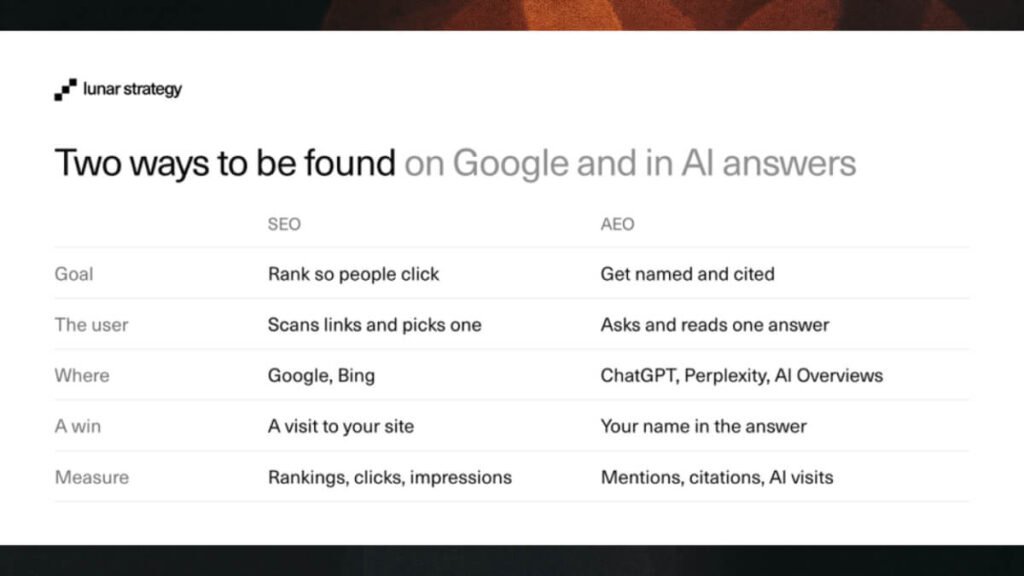
The two overlap a lot. A page that search engines trust is also a page AI tools are more likely to trust, and Google’s AI Overviews sit on the same results page as the organic links. For many crypto questions, the AI Overview now appears first, then the “People also ask” boxes, and only after that the regular results. We cover how the two work together in more depth at Lunar Strategy.
Whoever answers first tells your story
If someone asks “is [project] safe?” and your own page answers, you decide which facts they see: what the product does, who built it and how it’s secured. If your page isn’t there, an exchange blog, a review site or a news story from two years ago answers instead, often with numbers that are no longer true.
This matters more in crypto than in most industries because the questions involve people’s money. Search engines and AI tools lean toward sources that look independent and reliable, so a project with thin or outdated pages hands its narrative to everyone else.
Ranking on Google helps, but it doesn’t guarantee a place in the AI answer. AI tools favor sites that search engines already trust, then run their own selection: they split a question into several smaller searches and pick the passages that answer each one best. A page can rank on the first page of Google and still be left out of what ChatGPT says about the same topic. SEO builds the foundation, and AEO makes that same content easy for AI tools to read and quote.
Five moves that work in both channels
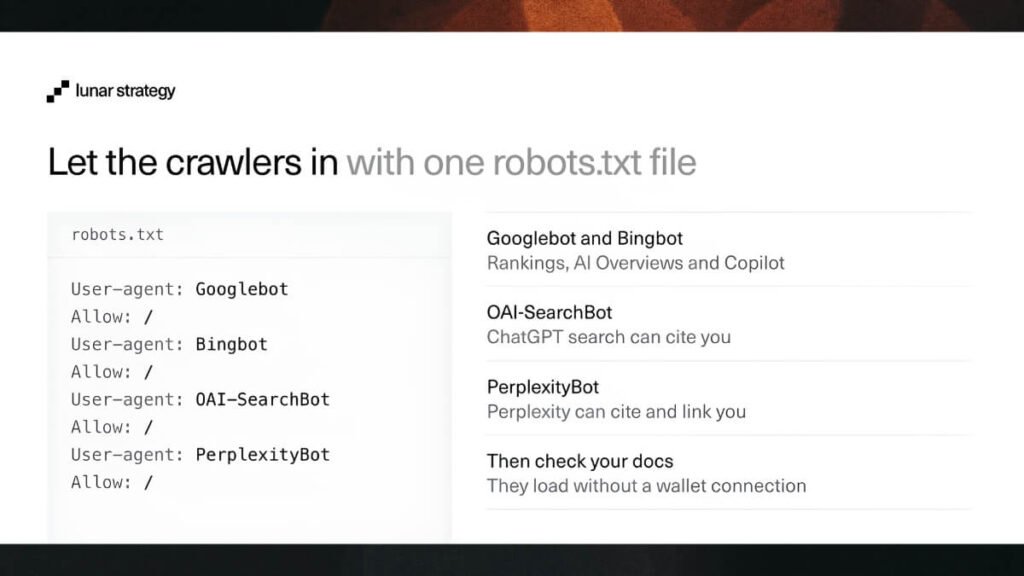
Make your site readable. Search engines and AI tools can’t rank or cite what they can’t read, and many crypto sites put their best information behind a wallet connection or load it with scripts that crawlers skip. Check three things with your developer:
- robots.txt allows Googlebot, Bingbot, OAI-SearchBot (used by ChatGPT) and PerplexityBot
- docs, tokenomics and FAQ pages open without connecting a wallet
- Google Search Console shows your key pages as indexed
Answer real questions, one per page. AI tools quote short passages, so a page that answers a single question in its first two sentences gives them something they can use as is. Build pages around what users actually type, such as “is [project] safe”, “how to stake [token]” or “[project] vs [competitor]”, open each section with a self-contained answer of around 40 words, and write headings the way people phrase the question.
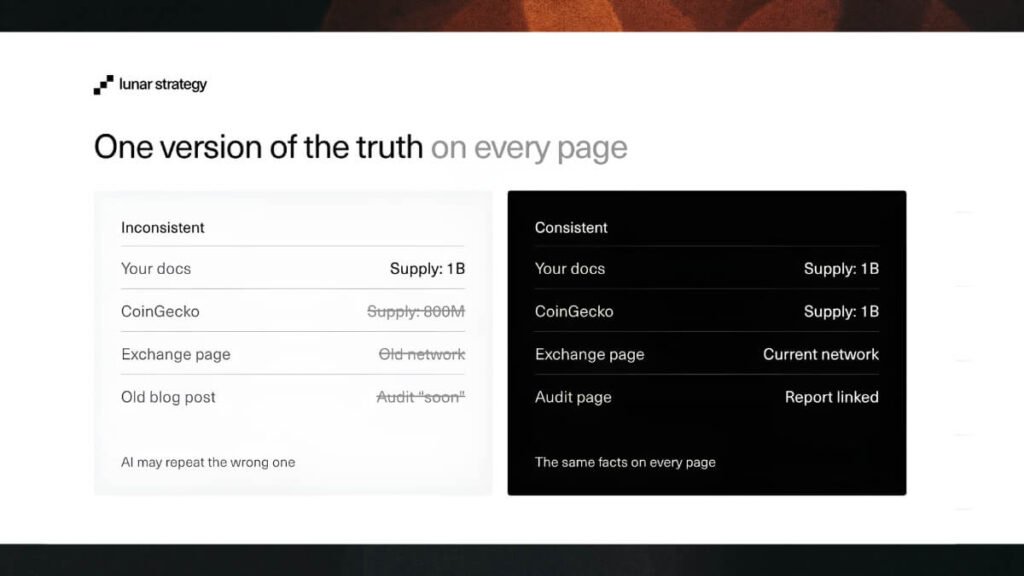
Keep your facts identical everywhere. Search engines and AI tools piece your project together from many sites. When your docs list one token supply, CoinGecko another and an exchange page a third, the AI has several versions to choose from and may repeat the wrong one. Use the same name, ticker, chain and contract address everywhere, keep CoinGecko, CoinMarketCap and exchange listings in sync with your docs, and update audit, team and partner pages as soon as something changes.
Earn mentions on independent sites. For “is it safe?” questions especially, AI tools look for confirmation from exchanges, wallets, review sites, security firms and crypto media, and paid placements count for little. Much of this already comes out of your existing marketing: a data-driven story in crypto media, a KOL thread that gets picked up, an audit announced by the auditor or a listing write-up on an exchange blog. Each of these can be cited, as long as it points back to a page that answers the question.
Update content and move with the narrative. Crypto changes quickly, and both search engines and AI tools prefer pages that are recent and accurate. A real update brings new data, current examples and the latest product changes, along with a new date. When a narrative breaks in your sector, publish while people are still searching for it.
How to measure progress
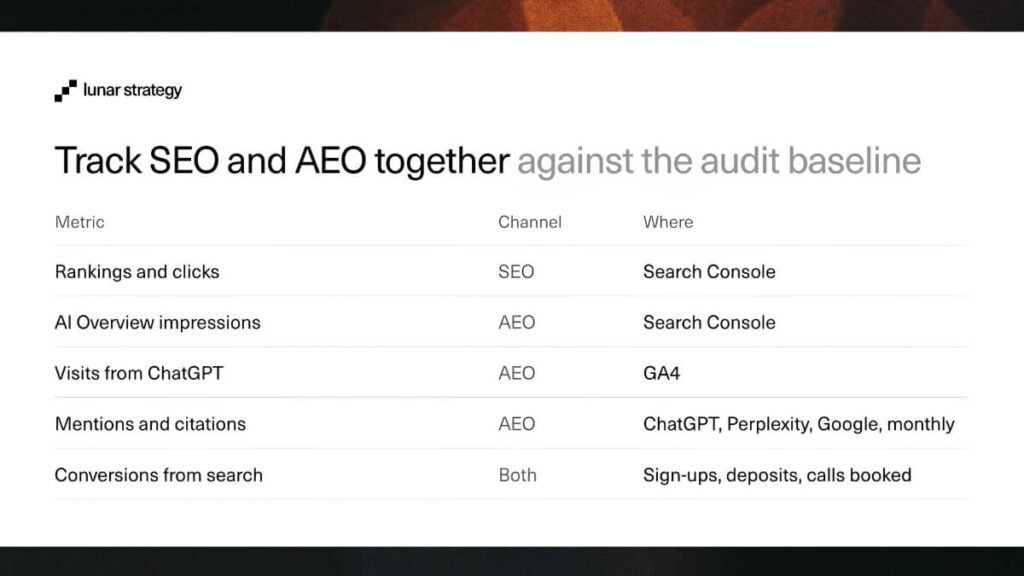
Record a baseline before you start, then track SEO and AEO side by side every month:
- rankings and clicks for your priority keywords in Google Search Console
- impressions in AI Overviews and AI Mode, which Search Console now reports
- visits from ChatGPT in GA4, which arrive tagged utm_source=chatgpt.com
- mentions and citations for your most important questions in ChatGPT, Perplexity and Google
- conversions that come from search, such as sign-ups, deposits and booked calls
Start before launch
The best time to build search is before a mainnet or token launch. A project that does it early goes live with pages people can already find, ready for the day attention peaks.
About the author: Tim Haldorsson is the CEO of Lunar Strategy, a crypto marketing agency that has worked with more than 300 crypto projects on go-to-market, token launches, KOL campaigns, PR and SEO for Google and AI search.
Read Also: RWAs Won’t Go Mainstream Until They Feel Like Crypto
Disclaimer: This is a contributor article, a free service allowing blockchain and crypto industry leaders to share their experiences or opinions with AlexaBlockchain’s audience. The content above has not been created or reviewed by the AlexaBlockchain team, and AlexaBlockchain expressly disclaims all warranties, whether express or implied, regarding the accuracy, quality, or reliability of the content. AlexaBlockchain does not guarantee, endorse, or accept responsibility for the content in any manner. This article is not intended to serve as investment advice. Readers are advised to independently verify the accuracy and relevance of any information provided before making any decisions based on the content. To submit an article, please contact us via email.