



Markets head into this week navigating a familiar cross-current: geopolitics setting the floor for energy, while U.S. inflation and growth data determine how much room the Federal Reserve has to turn dovish.
The immediate catalyst is a second round of indirect U.S.–Iran nuclear talks in Geneva on Tuesday, as tensions around the Strait of Hormuz keep traders alert to headline risk. Iran staged drills near the key shipping lane as negotiations began, showing why crude has stayed sensitive to diplomatic signals even as broader demand and supply fundamentals remain mixed.
Oil: diplomacy as the marginal driver
Oil markets are treating the Geneva discussions as the week’s highest-beta event. Brent traded around the high-$60s a barrel in early Tuesday dealing, with WTI near the low-$60s, reflecting a risk premium that tends to rise quickly when Middle East shipping routes are in focus.
The price action can be seed as less about near-term balances and more about the probability distribution around sanctions enforcement, potential supply disruptions, and—at the optimistic end—de-escalation that could relax constraints. Citi has argued geopolitics is likely to support crude in the near term, but sees scope for prices to drift lower later in 2026 if conflict risks cool and additional supply comes through.
That setup matters beyond energy: oil is the most direct channel through which geopolitics can leak into inflation expectations—especially at a moment when the market is trying to price the Fed’s next move with more confidence.
The U.S. macro “data dump”: minutes, PCE, and delayed GDP
On the macro side, the central issue is whether incoming U.S. data validate the market’s easing bias or force a re-pricing of the first cut.
The Fed will publish minutes from the Jan. 27–28 meeting on Wednesday, Feb. 18, a release that often clarifies how broadly the committee shares concerns about growth versus inflation persistence.
Then Friday, Feb. 20 brings an unusually consequential pairing: the advance estimate of fourth-quarter 2025 GDP and the Personal Income and Outlays report that contains the Fed’s preferred inflation gauge, the PCE price index. The Bureau of Economic Analysis rescheduled both releases to Feb. 20 after they were originally slated for late January, turning Friday into a focal point for rates and FX markets.
In practice, traders will treat the trio—minutes, GDP, PCE—as a single narrative test: does disinflation remain intact without a sharp growth downshift, or is the economy still running hot enough to keep policy restrictive longer?
Rates, FX and equities: why positioning feels fragile
Thin liquidity in parts of Asia due to Lunar New Year closures has already left cross-asset markets more headline-sensitive, with investors cautious ahead of both the Geneva talks and U.S. releases.
In that environment, the dollar and front-end rates can overshoot on surprises. A softer-than-expected PCE print, or minutes that emphasize downside risks, would typically reinforce rate-cut pricing—pressuring the dollar and easing financial conditions. Conversely, stronger inflation or more hawkish minutes can re-steepen the “higher for longer” tail risk, tightening conditions quickly.
That sensitivity is showing up most clearly in gold—an asset that trades as a real-rate proxy as much as a geopolitical hedge.
Gold: above $5,000 as a battleground, but not a straight line
Gold has been consolidating around the $5,000/oz region after a powerful run, with Tuesday’s trade highlighting how quickly the metal can slip when the dollar firms and haven demand pauses. Spot gold fell to the high-$4,900s on Feb. 17, driven by both a stronger dollar and reduced participation from major Asian markets during the holiday period.
The chart logic around the big round number has become part of the narrative. A sustained move above $5,100 is increasingly viewed as a trigger for trend-following inflows, while breaks below $5,000 raise the probability of a deeper retracement into the high-$4,800s—levels. And, this can be the next meaningful support zone in a post-rally normalization.
Lukman Otunuga, senior market analyst at FXTM, argued the interaction between U.S. data and geopolitics could set the tone across assets, saying: “This week’s US data and US-Iran talks could be decisive for markets. A solid PCE print and GDP could reinforce dovish rate-cut bets, pressuring the dollar while supporting gold and US equities.” He added that “Gold remains well-supported above $5,000, but volatility may persist given thin liquidity in China and geopolitical uncertainty. Traders should expect swings across FX, equities, and crypto.”
The key nuance: gold’s reaction function is not purely “risk-off.” If oil headlines push inflation expectations higher, that can lift nominal yields and complicate gold’s path even as geopolitical demand improves. Conversely, if diplomacy calms oil and PCE cools, gold can rally on easing real yields even with less overt haven demand. That’s why this week’s mix—Geneva plus PCE—has outsize influence.
Bitcoin: macro-sensitive, but trading its own levels
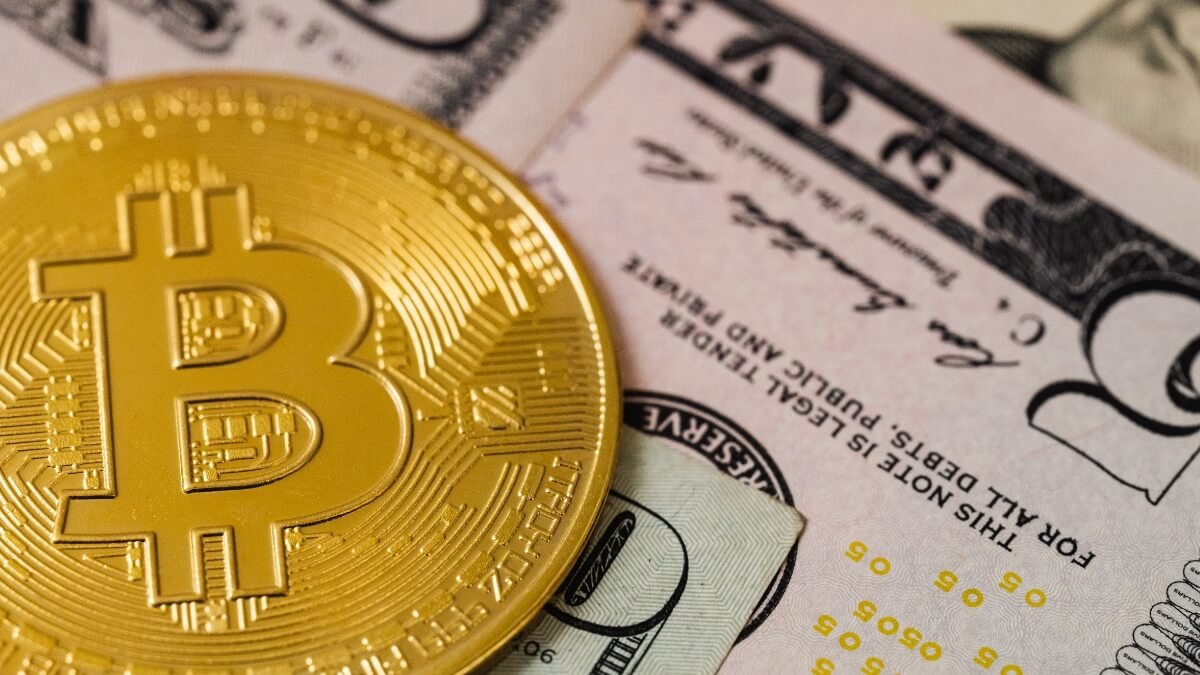
Bitcoin has been hovering around $68,000, with traders mapping $60,000 as a consequential liquidation and positioning level after the market’s sharp pullback from late-2025 highs.
Bitcoin is down 1.22% to $67,870 in 24h, closely tracking a 0.94% drop in the total crypto market cap, according to CoinMarketCap Bitcoin data.
The near-term dynamic resembles a macro “risk barometer”: easier financial conditions and a softer dollar tend to help crypto, while firmer yields and a resurgent dollar raise the hurdle for sustained upside. At the same time, crypto microstructure can dominate over short windows—particularly if leveraged positioning clusters around round-number supports.
That makes Friday’s U.S. releases and Wednesday’s Fed minutes relevant not because they “predict” bitcoin, but because they can shift the broader liquidity regime that crypto often amplifies. A dovish interpretation of the data can ease the pressure on high-beta assets; a hawkish surprise can revive the reflexive de-risking that pushes traders to defend well-watched downside levels.
The week’s takeaway
For investors, the most important point is sequencing. Tuesday’s Geneva headlines can move oil immediately, but the durability of those moves will depend on whether Friday’s PCE and GDP prints nudge the Fed narrative toward earlier cuts—or reinforce patience.
In other words, geopolitics may set the range, but U.S. macro is still the anchor for rates—and by extension the dollar, gold’s real-rate impulse, and the temperature of risk appetite that bleeds into equities and crypto.
The article “Will US-Iran Talks and US PCE Set the Tone for Oil, Gold and Bitcoin?” was first published on AlexaBlockchain. Read the complete article here: https://alexablockchain.com/Will-US-Iran-Talks-and-US-PCE-Set-the-Tone-for-Oil-Gold-Bitcoin/
Disclaimer: The information provided on AlexaBlockchain is for informational purposes only and does not constitute financial advice. Read complete disclaimer here.
Image Credits: Shutterstock, Canva, Wiki Commons