





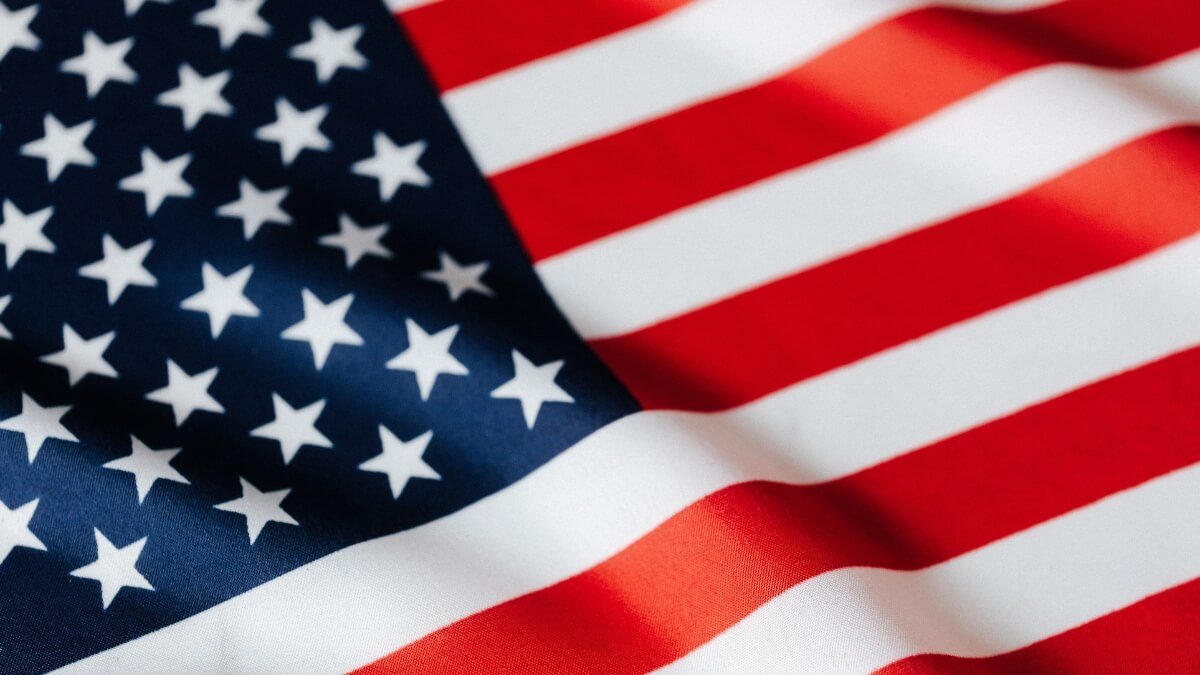
The United States remains the world’s most active market for cryptocurrency investor interest, according to a new CoinInsider study, even after Bitcoin’s retreat from last year’s record highs.
The report ranked 30 countries by search activity, ownership growth, exchanges, wallet providers and crypto-related companies. It placed the U.S. first, followed by Singapore, Hong Kong, Switzerland and Canada.
The findings point to a broader shift in crypto markets.
Retail interest has not disappeared after the latest price correction. But it is becoming more uneven across countries, with mature markets showing steadier demand while financial hubs such as Hong Kong and Switzerland appear more sensitive to price cycles.
Bitcoin climbed above $120,000 for the first time in July 2025, reaching a record $123,153.22, Reuters reported at the time. It has since fallen sharply, trading around $76,734 on April 27, 2026, according to data from CoinMarketCap.
CoinInsider said the U.S. ranked first because of a mix of search activity and market infrastructure.
The study found 5,300 monthly U.S. searches for “buy digital currency” and 28,000 monthly searches for “digital currency wallet.” It also cited 169 digital currency exchanges, 54 registered wallet services and 155 crypto companies operating in the country.
That ranking does not necessarily mean the U.S. has the highest crypto ownership rate.
Triple-A estimated that 562 million people globally owned digital currencies in 2024, equal to about 6.8% of the global population. Its data also showed Singapore among the leading major economies by ownership rate, at 24.4%.
The distinction matters.
CoinInsider’s ranking measures “obsession” through investor behavior signals, including searches and infrastructure availability. Chainalysis, by contrast, ranks grassroots adoption using transaction activity, web traffic and purchasing-power-adjusted metrics across 151 countries.
Singapore ranked second in CoinInsider’s study.
The report said the number of Singaporean digital currency holders rose from 664,000 to more than 1.4 million in one year, meaning roughly one in four residents now owns at least one digital asset. It also cited more than 80 exchanges and a 9% increase in crypto-related search interest.
Hong Kong ranked third, reflecting both investor demand and regulatory change.
CoinInsider said digital currency ownership in the city rose from 181,000 holders to more than 1 million. It linked the jump partly to rising crypto prices and Hong Kong’s formal licensing framework for virtual asset trading platforms.
Public regulatory data, however, suggests the licensed-exchange count should be treated carefully.
Hong Kong’s Securities and Futures Commission lists formally licensed virtual asset trading platforms and separately lists applicants whose approvals are still pending. The SFC also warns that applicants are not licensed and may not comply with its requirements.
Switzerland ranked fourth.
CoinInsider said ownership there grew to more than 1 million people in a year, making it one of the fastest-growing crypto ownership markets in the top five. The country has long positioned itself as a digital-asset hub through its “Crypto Valley” ecosystem and comparatively clear rules for blockchain companies.
Canada completed the top five.
The report said the number of Canadians holding digital assets rose from 2.7 million to just over 4 million in 12 months, a 49% increase. It also pointed to strong monthly search demand for “buy digital currency” and “digital currency wallet.”
A digital currency market expert from CoinInsider said the study found two different kinds of investor behavior.
“We also looked at how consistent digital currency interest is across different countries,” the expert said. “Some markets stay steady no matter what prices are doing. Germany, the US, and Canada are good examples of this. Others jump sharply when digital currency rises and go quiet when it drops.”
The expert added that Hong Kong and Switzerland showed more price-sensitive interest, while U.S. investors appeared to show stronger conviction.
“Steady interest usually means people are buying regardless of the price,” the expert said. “So in the case of the US, digital currency investors are more serious about their holdings and have real convictions about them. On the other hand, changing interest means people there are more likely to be just chasing the hype.”
The study comes at a complicated moment for crypto markets.
Bitcoin’s drawdown has tested retail confidence, but search interest in wallets and buying activity suggests new users are still entering the market. The more important signal may be that crypto participation is no longer limited to price speculation alone.
In the U.S., a large exchange base, wallet infrastructure and public-market access through ETFs have made digital assets easier to access. In Singapore, Hong Kong and Switzerland, regulatory positioning continues to shape investor confidence.
Still, the ranking should not be read as a definitive adoption table.
Search demand, exchange counts and company registrations show market attention and infrastructure. They do not show the size of actual holdings, trading volume, or whether users are buying for long-term use, short-term speculation, or both.
That is why the U.S. result is notable.
It suggests that even after Bitcoin’s pullback, the world’s largest capital market continues to provide the deepest pool of retail curiosity, financial infrastructure and crypto company activity. For the crypto industry, that may matter more than a single price cycle.
The article “U.S. Tops Global Crypto Interest Ranking as Investors Keep Buying Despite Bitcoin Pullback” was first published on AlexaBlockchain. Read the complete article here: https://alexablockchain.com/us-tops-global-crypto-interest-ranking-as-investors-keep-buying-despite-bitcoin-pullback/
Read Also: MoneyGram, Pairpoint and eToro Back Midnight’s Privacy Blockchain Before Mainnet
Disclaimer: The information provided on AlexaBlockchain is for informational purposes only and does not constitute financial advice. Read complete disclaimer here.
Image Credits: Shutterstock, Canva, Wiki Commons


